
While wisdom teeth surgery itself is straightforward, proper post-operative care plays a crucial role in how smoothly and quickly you recover. Immediately after wisdom teeth removal, a soft-food diet is essential. Begin with cool, smooth foods (like yoghurt or apple sauce), then gradually add lukewarm soft solids over 5–7 days.
One of the most important aspects of aftercare is your diet. Choosing the right foods can help minimise discomfort, promote healing, and reduce the risk of complications. So, what should you eat after wisdom teeth removal to ensure a smooth recovery? Let’s explore the best options for your post-surgery meals.
Eating the right foods can significantly reduce discomfort and help protect the sensitive areas around the extraction site. Soft foods that are easy to chew minimise irritation and prevent pressure on the surgical site, which helps avoid complications like dry socket—a painful condition that occurs when the blood clot dislodges.
Discover Five signs your wisdom teeth are coming through.
After the procedure, your mouth will be sore and sensitive, so it’s best to stick to cold, soft, and smooth foods. These options help reduce swelling and prevent discomfort.
Your mouth will still be sensitive, but you can start incorporating slightly more substantial soft foods. Make sure they are still easy to chew and gentle on the mouth.
As your mouth begins to heal, you can gradually introduce more variety and slightly firmer foods, but still avoid anything too hard or crunchy.
As healing progresses, you can reintroduce more normal foods, but continue to avoid anything too hard, crunchy, or spicy for a few weeks.
Staying hydrated is essential for a smooth recovery after wisdom teeth removal. Drinking plenty of water helps maintain your overall health and supports the healing process. However, it’s important to avoid alcohol and fizzy drinks, as they can irritate the extraction site and slow down recovery. Additionally, avoid using straws, as the suction can dislodge the blood clot at the surgical site, leading to a painful condition known as dry socket.
Whether you’re preparing for wisdom teeth removal or have questions about your recovery, don’t hesitate to reach out to us. Contact Granite Belt Dental today to book an appointment and let us help you maintain your oral health with comfort and confidence.
Ever wondered “How many teeth does an adult have”? Well, you’re not alone! In this blog we are going to take a look at how many teeth adults have, the types of teeth and their function, as well as how wisdom teeth affect the number of teeth an adult has in their mouth – all broken into bite-sized chunks. We’ll see ourselves out…
Let’s answer the question first: a normal adult has 32 teeth, 16 in the top jaw and 16 in the bottom. This is probably as much information as most people are after! But if you want to learn more…
We asked one of our resident dentists this question and they told us:
“The teeth in an adult mouth are split into four categories: incisors, canines, premolars, and molars, with a dental formula of 2:1:2:3 in each quadrant (quarter) of the mouth. That is 2 incisors, 1 canine, 2 premolars, and 3 molars (one of which is a wisdom tooth, although some lucky folks never have their wisdom teeth come through and so only have 28 teeth) in each half of each jaw (upper right, upper left, lower right, lower left).”
Still keeping up? Let’s take a closer look at these different types of teeth – this will help you understand it all a bit better (the image is especially helpful)!
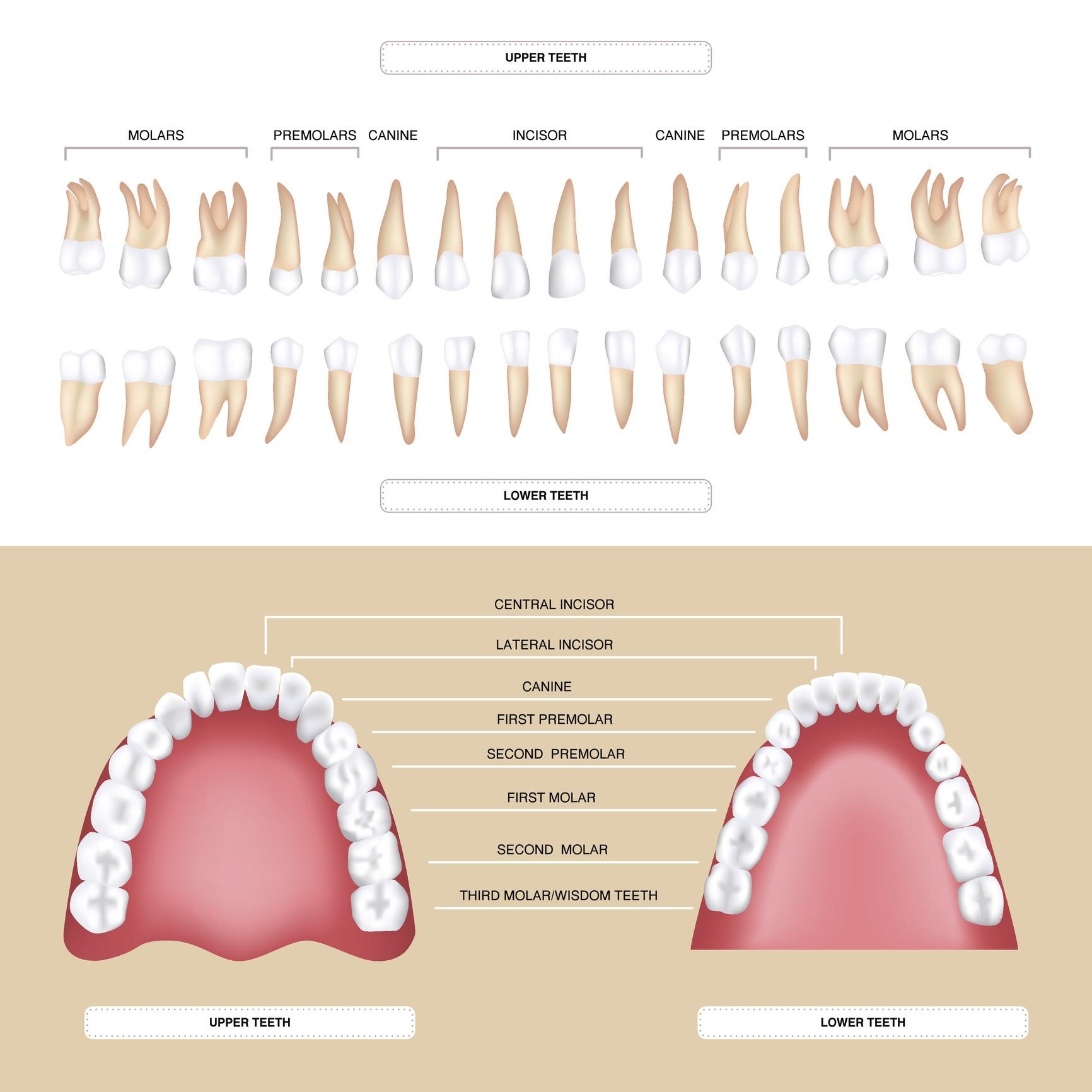
These are the flat, sharp teeth situated at the front of your mouth. Their primary role is to bite into food and break it into smaller pieces.
Also known as “cuspids,” these teeth flank your incisors and have a pointed structure designed to tear food effectively. They also have the longest root of any tooth, giving them extra anchorage. Not as impressive as those in a lion, but we make do!
Positioned behind the canines, these flat-topped teeth have features from both the canines and molars, assisting in the grinding and crushing of food into more manageable pieces.
These are the robust, flat-surfaced teeth located at the back of your mouth, designed for chewing food into a consistency suitable for swallowing. Wisdom teeth are a type of molar – let’s take a closer look at these now.
This is another common question. Wisdom teeth, also referred to as third molars, typically erupt during the late teens or early adult years. You have four wisdom teeth in total: one in at the very back of each quadrant of the mouth (upper left, upper right, lower left, lower right). Although they don’t erupt for everyone, those who do have wisdom teeth will reach a total of 32 teeth (so people without wisdom teeth only have 28 teeth). Wisdom teeth can sometimes cause complications like impaction or overcrowding, which may require expert care.
Understanding how many teeth an adult has and the potential challenges posed by wisdom teeth is a great step in maintaining great oral health. At Granite Belt Dental, we are dedicated to helping you and your family achieve and maintain a healthy, beautiful smile. We offer a wide range of services to cater to patients in Warwick and Stanthorpe, covering everything from routine checkups and cleanings to more complex procedures like fillings, crowns, and bridges.
We understand that each patient is unique, and we tailor our treatment plans to suit individual needs. Contact us for a consultation or to schedule an appointment online. Your family’s oral health is our priority, and we look forward to making a positive difference in your dental care journey.
Maintaining your dentures properly is key to preserving not only their appearance and functionality but also your overall oral health. Thanks to revolutionary materials and techniques, today’s dentures are far more sophisticated than ever before.
In this guide, we’ll walk you through the essential steps on how to clean your dentures effectively, ensuring they remain in top condition and continue to bring out your best smile.
While dentures take some getting used to, modern dentistry has made considerable advancements in the design of these dental appliances, making them more comfortable and natural-looking than ever before.
Complete Dentures
These are used when all teeth are missing and can be either “conventional” or “immediate.” Conventional dentures are made after the teeth have been removed and the gum tissue has healed, while immediate dentures are prepared in advance and can be positioned as soon as the teeth are removed.
Partial Dentures
These are opted for when one or more natural teeth remain in the upper or lower jaw. Partial dentures are not only beneficial from an aesthetic point of view but also prevent other teeth from shifting.
At Granite Belt Dental, we provide a range of denture options. From unobtrusive flexible single tooth replacements with clear bases to full dentures retained with dental implants, our solutions improve aesthetics and restore functionality effectively. If you’re interested in exploring these options, contact our team today to help you find the best solution for your needs.
Remove and Rinse
After eating, remove your dentures to rinse away food particles under warm (not hot) water. This helps prevent food and plaque buildup.
Brush Daily
Use a soft-bristled brush and non-abrasive denture cleanser to gently brush all surfaces of the dentures. Avoid using toothpaste, as it can scratch the surface, making the dentures more prone to staining.
Rinse Thoroughly
After brushing, rinse the dentures thoroughly under running water to remove any leftover cleanser.
Soaking your dentures overnight not only cleanses them but also helps to maintain their shape.
Use a Denture Soaking Solution
Denture-specific solutions help remove stains and plaque and disinfect your dentures. Always follow the manufacturer’s instructions.
Natural Soaking Solutions
For a more natural approach, you can soak your dentures in a solution of equal parts vinegar and water, which helps in removing stains and disinfecting. Rinse thoroughly before putting them back in your mouth to remove any taste of vinegar.
Effervescent Tablets
These tablets typically contain active ingredients that help remove tough stains and bacteria when used in soaking. Simply drop a tablet into warm water with your dentures and let them sit as directed before rinsing them thoroughly.
Baking Soda Paste
Create a paste using baking soda and a small amount of water. Gently brush this mixture onto the dentures to help remove stains and neutralise odours. Rinse well after cleaning.
Hydrogen Peroxide
This is another safe alternative for deep cleaning. Soak your dentures in a solution of equal parts hydrogen peroxide and water to help kill bacteria and whiten your dentures. Ensure a thorough rinse before using the dentures again.
Be Gentle
Always handle your dentures with care. When cleaning or removing them, do so over a folded towel or a basin filled with water to avoid breakage if they are accidentally dropped.
Avoid Bending
When cleaning your dentures, be careful not to bend or damage the plastic or the clasps while brushing.
Keep Them Moist
To prevent your dentures from drying out and losing their shape, store them in a denture cleaning solution or plain water when you’re not wearing them. However, if your dentures have metal attachments, water is preferable as it could tarnish the metal when soaked in a solution.
Avoid Heat
Store your dentures away from heat sources, as excessive heat can warp dentures, altering their fit.
Professional Cleaning
Your dentist or dental hygienist can perform a professional cleaning on your dentures, which can remove any built-up tartar and hard-to-reach deposits that regular home cleaning might miss.
Adjustments
Over time, your mouth may change, which can affect the fit of the dentures. Regular visits allow your dentist to make necessary adjustments to ensure optimal comfort and functionality.
Oral Health Check
These visits are also an opportunity to check your oral health for any issues such as gum disease or oral cancer, which are important for everyone, but especially for denture wearers.
At Granite Belt Dental, we offer a variety of advanced denture options, including traditional dentures as well as those supported by dental implants. We also offer professional cleaning for aftercare of your dentures.
If you’re interested in exploring these denture options or need advice on maintaining your current dentures, do not hesitate to contact us. Our team is dedicated to helping you achieve the best possible outcome with your oral journey and ensuring you can smile with confidence.
Missing a tooth is more than an aesthetic issue, it can impact your oral health and the functionality of your mouth. Gaps left by missing teeth can cause your teeth to shift, change bite pressure, and can cause a gradual degradation of the jawbone.
Dental bridges are a solution for replacing one or more missing teeth. They bridge the gap where teeth are missing, using a combination of false teeth and crowns to restore both the appearance and function of your teeth.
A dental bridge is a custom-made way of replacing missing teeth. It is made up of one or more false teeth, known as pontics, which are held in place by crowns attached to the teeth adjacent to the empty space. This assembly spans, or “bridges,” the gap in your smile, hence the name.
The process starts with preparing the adjacent teeth on either side of the gap. These teeth are reshaped to allow the placement of crowns, which serve as anchors for the bridge. Once the crowns are securely attached, the pontics fills the space left by the missing tooth (or teeth), restoring functionality and aesthetics. The entire structure is custom-made to ensure it matches your natural teeth, both in function and appearance.
There are a few types of dental bridges, each suitable for different scenarios:
Depending on the aesthetic needs, the location of the missing tooth, and budget, dental bridges can be created from different materials.
Dental crowns play an important role in the construction and function of dental bridges. Their role is to serve as anchors or ‘abutments’.
When creating a dental bridge, the teeth adjacent to the missing tooth gap are prepared and reshaped to receive crowns. These crowns provide the necessary support to securely hold the bridge in place. Once fitted, the crowns are cemented to the prepared teeth, and the pontic (the artificial tooth) is suspended between them, bridging the gap.
Beyond supporting the bridge, dental crowns also protect the natural teeth that they cover. By covering these teeth with crowns, they are safeguarded against wear and decay. This is important because these teeth are subjected to increased stress from the bridge, as they bear the force of biting and chewing that is transmitted through the pontic.
Crowns used in dental bridges are designed to match the colour and shape of your natural teeth, making the bridge look as natural as possible. The crowns and the pontics are created to align with the biting and chewing surfaces of your existing teeth, which promotes a balanced bite and prevents issues such as jaw pain or further tooth damage.
At Granite Belt Dental, we pride ourselves on leveraging the latest advancements in dental technology to enhance patient care and improve treatment outcomes. One of the most significant technological enhancements we have adopted is the CEREC Primescan and milling unit, which allows us to offer same-day crown and bridge work.
The CEREC Primescan and milling unit uses high-resolution digital scans to create an accurate 3D model of your teeth, which is then used to create dental crowns or bridges. The entire process—from digital impression to the placement of the final restoration—is completed in a single appointment.
Same-day crown and bridge work offers numerous benefits for patients, including:
If you’re considering dental crowns or bridges, don’t hesitate to contact Granite Belt Dental. Our team is ready to guide you through your options and help you achieve the best possible outcome for your dental health. Book a consultation today to learn more about how we can restore the beauty and functionality of your smile. Visit our website or call us directly to schedule your appointment. Let us help you take the first step towards a brighter, more confident smile!
A dental implant procedure involves inserting an artificial tooth into the jawbone to replace a missing tooth. These implants can support a crown, bridge, or denture, and are one of the best choices if you have a missing tooth, as the implants are strong and durable.
Let’s take a closer look at dental implants and the procedure to see if it might be right for you.
As mentioned above, a dental implant is an artificial tooth that is inserted into the jawbone. These implants can support a dental prosthesis such as a crown, bridge, denture, facial prosthesis, or even act as an orthodontic anchor in bit correction treatments and other orthodontic procedures.
Dental implants are usually made from titanium or titanium alloys, materials that are known for their toughness, durability, and compatibility with body tissues. Unlike dentures, which can be removed, dental implants are permanent fixtures. Because they are fixed into the jawbone, they provide significant benefits in terms of comfort, appearance, and function, closely mimicking the feel and function of natural teeth.
Of course, the first criterion in deciding if you’re right for a dental implant is whether you have a tooth or teeth missing. Let’s look at some specific criteria that could make you a perfect candidate for a dental implant.
Your jawbone is the foundation for the implant. It must be healthy and dense enough to support the implant. If your jawbone is too thin or weak, you may require a bone graft before proceeding.
Adequate bone density is crucial for implant support. This criterion is closely related to the health of your jawbone but focuses on whether there’s enough bone volume for implant integration.
The health of your gums and surrounding oral tissues is vital. Gum disease or other oral health issues can compromise the success of the implant.
Certain chronic medical conditions, such as diabetes or heart disease, can affect healing and might complicate the implant process. Your overall health and any medications you take will be assessed.
Smoking can hinder healing in the mouth, making the success of an implant less likely. Non-smokers or those who can quit during the implant process and healing are ideal candidates.
Candidates should have a jawbone that’s reached full growth, which typically means dental implants are more suited to adults rather than children or teenagers.
If you’re unable or unwilling to wear dentures, implants offer a permanent solution that doesn’t require the maintenance or lifestyle adjustments associated with dentures.
Missing teeth can affect speech. Implants can restore natural speech by filling in gaps that may cause lisping or other speech impediments.
The process of getting an implant can span several months, as it requires time for healing and integration of the implant into the bone. A willingness to commit to this process is necessary.
Candidates who are willing to maintain good oral hygiene and visit their dentist regularly will see the best long-term results from their implants.
If you meet some of these criteria, dental implants could significantly improve your quality of life by restoring both the function and aesthetics of your natural teeth. It’s important to have a thorough consultation with your dentist or dental specialist to determine your eligibility for this transformative procedure.
While a dental implant procedure is generally very safe, there are certain risks associated with it.
As with any surgery, there is a risk of infection at the site of the implant. Strict adherence to post-surgical care instructions and maintaining good oral hygiene can significantly reduce this risk.
During the implant procedure, there’s a risk of injury to surrounding teeth or blood vessels. This is why choosing a highly skilled and experienced dental surgeon is critical, as they can minimise the likelihood of such damage.
One of the more serious risks involves damage to the nerves in the jaw, which can result in pain, numbness, or tingling in your natural teeth, gums, lips, or chin. This condition can be temporary or permanent and is a consideration especially when implants are placed in the lower jaw.
For implants in the upper jaw, there’s a risk that the implant could protrude into one of the sinus cavities, leading to sinus problems. Special techniques and careful planning are used to avoid this risk, including potentially sinus augmentation or choosing an implant size and placement that avoids the sinus cavities.
Despite these risks, dental implants remain a safe and effective way to replace missing teeth for most people. By working closely with your dentist and following their advice, you can enjoy the benefits of dental implants while minimising the potential for complications.
Ensuring the success of your dental implant involves meticulous oral hygiene and lifestyle choices. Here’s how to safeguard your investment:
Adopting these measures not only maximises the implant’s success but also promotes overall oral health. Remember, a dental implant is a long-term commitment to your smile and wellbeing; caring for it is paramount.
If you live in Stanthorpe, Warwick, Inglewood, or surrounds, then choose Granite Belt Dental for your implant dentistry today.
We provide professional dental implant services and we will be happy to help you with yours. Please contact us today to book your appointment.
There’s a first time for everything – your baby’s first word, first steps, and, of course, their first tooth. Babies usually start teething between 4 and 7 months of age, with the lower front teeth typically being the first to appear. Teething is a significant milestone in your little one’s early life, often met with equal parts excitement and apprehension. As a parent, you’re bound to have a host of questions: When do babies start teething? What are the signs? How can I help my bub through this? When do baby teeth fall out? These moments matter.
Let’s take a look at the world of teething, providing you with all the essential information to go through your child’s journey with confidence.
The journey to a full smile may begin earlier than you might think. Typically, babies start teething around six months of age. However, it’s not uncommon for some bubs to start showing signs of teething as early as three months or as late as twelve months.
You might be wondering, how early can babies start teething? It’s rare, but some infants are born with one or two teeth, known as natal teeth. More commonly, you may notice the first signs of teething closer to the three-month mark, with the lower front teeth, or incisors, coming through first. This is followed by the upper front teeth. A handy way to keep track of this progression is through a baby teeth chart, which outlines the typical order and age range for each new tooth.
Every child is unique, and so is their teething timeline. Some babies breeze through it with barely a whimper, while others might find it a more challenging experience. Knowing what to expect can make this developmental stage easier for both you and your baby.
Every baby’s teething journey is different, but there are common early signs of teething that indicate your little one’s teeth are on the way. Being familiar with these signs can help you provide the right support and comfort.
It’s time to break out the bibs! Increased drooling is often one of the first signs of teething. While it’s a normal part of development, keep an eye on your baby’s chin to prevent skin irritation.
Your bub might start gnawing or rubbing their gums. This is their way of easing the discomfort. Offering a cool (not frozen), clean teething ring can be a safe way for them to apply pressure to their gums. Avoid teething items that are too hard or have liquid inside, as these can pose a safety risk.
Teething can be uncomfortable, and your usually cheerful baby might become a bit grumpy or irritable. Extra cuddles and patience are the best medicine here.
The discomfort of teething might disrupt your baby’s usual routines. They might fuss during feedings or wake up more often at night. If your baby is already eating solids, cold foods like yoghurt or a chilled spoon can be soothing.
Some babies might have a slight increase in temperature when teething. However, a high fever is not a normal teething symptom and should prompt a visit to your healthcare provider.
Recognising these signs of teething can help you better understand and respond to your baby’s needs during this developmental stage.
Avoid any remedies that could be harmful, such as teething tablets, gels with benzocaine, or amber teething necklaces. Always consult with your paediatrician or dentist if you’re unsure about a particular teething remedy. And remember that while teething can be uncomfortable, it’s a natural part of growth and development – you and your baby will get through this!
A baby teething chart is an incredibly useful tool for parents. It helps you track the development of your child’s teeth and understand what to expect at each stage of their teething journey.

The lower central incisors are usually the first to appear, typically around 6 to 10 months. Shortly after, the upper central incisors make their entrance, usually between 8 to 12 months.
Following the incisors, the upper and lower lateral incisors (the teeth next to the central incisors) usually emerge. This occurs around 9 to 13 months for the upper and 10 to 16 months for the lower lateral incisors.
Between 13 to 19 months, you can expect the first molars to appear, providing a new surface for chewing. The canines then fill in the gaps, usually between 16 to 22 months.
The final set of baby teeth to appear are the second molars, located at the back of the mouth. These usually emerge between 25 to 33 months.
By the time your child is three years old, they will likely have a full set of 20 baby teeth. It’s important to note that while this chart provides a general timeline, some bubs might experience a slightly different teething schedule – and that’s perfectly normal.
Understanding the baby teeth chart can give you a clearer picture of your child’s dental development and prepare you for what’s next in their teething journey. It’s also a great tool to use when discussing your child’s teeth with your paediatric dentist.
Teething is a natural process, but there are certain instances where a visit to the dentist is advisable.
The Australian Dental Association recommends that the first dental visit should occur when the first tooth becomes visible or when the child reaches their first birthday, whichever comes first. This visit is more about getting your baby familiar with the dentist and catching any early issues. After the first visit, regular check-ups every six months can help keep your baby’s teeth healthy. These visits allow the dentist to monitor growth and development, provide preventive care, and address any concerns you may have.
You should consult with your dentist if your baby seems to be in extreme discomfort, if teething appears to be delayed, or if you notice any signs of tooth decay – like brown or white spots on the teeth, bad breath, or swollen gums. Your dentist can check for any underlying problems and offer advice.
Teething is an exciting yet challenging time in your baby’s life. Understanding when babies start teething, recognising the signs, and knowing how to care for their teeth can make this phase smoother for both you and your child. At Granite Belt Dental, we’re here to support you through every milestone of your child’s oral health journey.
Whether it’s your baby’s first tooth or their first dental visit, our team is dedicated to providing the care and advice you need. Feel free to reach out to us for any teething concerns or to schedule your baby’s dental visit. Together, let’s ensure your little one’s smile stays bright and healthy from the very start!
Have you ever wondered how celebrities achieve their picture-perfect smiles? Often, the secret lies in a popular cosmetic dentistry solution: veneers. In this blog, we’ll explore everything you need to know about veneers – from their functionality to their aesthetic benefits.
Veneers are thin, custom-made, tooth-shaped pieces of porcelain or resin designed to cover the front surface of teeth, enhancing their appearance. These pieces are bonded to the teeth, changing their colour, shape, size, or length. The concept of veneers is not new in cosmetic dentistry. They’ve been around for several decades, evolving significantly over time in terms of materials and application techniques. Initially developed as a temporary solution for actors to achieve a perfect on-screen smile, veneers have now become a long-term solution for anyone looking to enhance their smile.
There are two main types of veneers: porcelain and composite resin veneers. Let’s look at each one a little more closely.
Known for their durability and high-quality appearance, porcelain veneers are custom-made in a lab to fit your teeth perfectly. They are strong, long-lasting, and less prone to staining compared to other types. Porcelain veneers can last for decades with proper care.
These are crafted directly onto your teeth in a single visit. Composite veneers are less expensive than porcelain but might not be as durable. They are easier to repair if damaged and are a great option for those looking for a less invasive and more cost-effective solution.
First, your dentist will conduct a thorough examination of your teeth to ensure veneers are suitable for you. This may involve taking X-rays or making impressions of your mouth and teeth.
For porcelain veneers, a small amount of enamel from the front of your teeth is removed. This step is crucial as it creates space for the veneers and ensures a natural fit and appearance. Don’t worry; the amount removed is minimal.
Next comes the customisation. Impressions of your teeth are sent to a dental lab where your veneers are crafted. This process can take a few weeks, during which temporary veneers might be put in place. Once your porcelain veneers are ready, they are bonded to your teeth using a special cement. A light beam is then used to harden this cement quickly, securely attaching the veneer to your tooth.
Composite resin veneers, however, are often applied directly onto the teeth and sculpted to the desired shape during the appointment. This method may be less time-consuming but requires a skilled hand for the best aesthetic results. On the other hand, indirect composite veneers prepare the veneers outside the dentist’s office or in a dental lab. The patient will be able to access the veneers on the next appointment. Indirect veneers are more costly.
Veneers are not just for Hollywood stars; they’re for anyone looking to improve their smile. Ideal candidates for veneers are those with:
While veneers are not considered a permanent solution since they will likely need to be replaced at some point, they are incredibly long-lasting. Porcelain veneers, for example, can last between 10 to 15 years or even longer with proper care. Composite resin veneers generally have a shorter lifespan, averaging around 5 to 7 years.
Maintaining veneers is relatively straightforward and similar to caring for your natural teeth. Regular brushing, flossing, and dental check-ups are essential. Avoiding habits like biting nails or chewing hard objects can help prolong their life.
The cost of veneers depends on several factors, including the type of veneers you choose, the number of veneers you need, and the specific rates of your dental clinic. Generally, porcelain veneers are more expensive than composite resin veneers due to their longer lifespan and more labour-intensive creation process.
Some dental insurance plans may cover a portion of the cost if veneers are deemed medically necessary, but this is often not the case for cosmetic procedures. It’s always a good idea to check with your insurance provider and discuss payment options with your dentist.
Veneers are just one of many cosmetic dentistry options available. Depending on your dental needs and preferences, there might be other suitable treatments:
Each of these alternatives has its own set of advantages and considerations, and your dentist can help you decide which is best for you.
At Granite Belt Dental, we are committed to helping you achieve your dream smile. We encourage you to schedule a consultation to discuss whether veneers are the right choice for you or if another cosmetic dental procedure might better suit your needs. Remember, a beautiful smile is a powerful thing – and we’re here to help you achieve it.
Teeth whitening lightens tooth colour by removing surface stains and breaking down deeper discolouration within the enamel, using peroxide-based products or professional dental treatments. The effectiveness, safety, and longevity of results depend on the method used and the underlying cause of discolouration.
Teeth lose their brightness over time due to everyday habits such as drinking coffee or red wine, smoking, ageing, and enamel thinning. Some discolouration sits on the tooth surface and responds well to basic whitening methods, while deeper staining requires professional treatment to achieve noticeable and even results.
This guide explains the different teeth whiteningoptions, including natural approaches, at-home products, and in-chair dental whitening. It also outlines which options deliver cosmetic improvement and which provide predictable, long-term results, so you can make an informed decision based on your teeth, sensitivity levels, and goals.
Yellow teeth are caused by 6 main factors: surface staining, enamel thinning, ageing, medication use, and lifestyle habits such as smoking. The type of discolouration determines which whitening methods will be effective.
Surface stains form on the outer enamel layer and are the most common cause of yellowing. Dark beverages such as coffee, black tea, red wine, and cola contain pigments that attach to enamel. Acidic foods and drinks increase staining by softening enamel and allowing pigments to absorb more easily.
Enamel becomes thinner over time due to natural wear, acidic diets, and grinding. As enamel thins, the underlying dentin, which is naturally yellow, becomes more visible, giving teeth a darker appearance.
As we age, our enamel naturally wears down, becoming thinner and more transparent. This reveals more of the underlying dentin, which is a darker, bone-like tissue beneath the enamel.
Certain medications, particularly some antibiotics, can cause tooth discolouration as a side effect. Conditions affecting enamel development in children, like coeliac disease, can also result in discoloured teeth.
Smoking and tobacco use cause deep, stubborn staining due to nicotine and tar. Inadequate brushing and flossing (poor oral hygiene) allow plaque and tartar to build up, which traps stains and dulls tooth colour.
Just as we inherit our eye colour, we can also inherit our enamel thickness and natural tooth colour. Some people naturally have brighter or thicker enamel, while others may have teeth that are more prone to yellowing.
Natural teeth whitening methods remove surface stains only and do not change the natural colour of teeth. These approaches can help maintain brightness between professional treatments but do not whiten enamel or reverse deep discolouration.
A diet that’s good for your teeth is good for your whole body. Limiting foods and beverages that stain teeth is a great start. Try reducing your intake of coffee, tea, red wine, and dark sodas. If you do indulge, rinse your mouth with water afterward or brush your teeth if possible. Additionally, eating a balanced diet rich in fruits, vegetables, and dairy products can help strengthen teeth and prevent decay, which can also affect their colour.
Baking soda lifts surface stains through mild abrasion. Used occasionally — no more than 2–3 times per week — it can brighten teeth slightly. Frequent use damages enamel and increases sensitivity, so it is not suitable for daily brushing.
Foods with a high fibre content, like apples, carrots, and celery, can help clean teeth by removing surface stains and plaque as you chew. These crunchy, fibrous foods increase saliva production, which helps neutralise acids that can wear down enamel.
Activated charcoal absorbs surface stains but is highly abrasive. Regular use increases enamel wear and tooth sensitivity. Dental professionals do not recommend charcoal products for ongoing whitening.
Hydrogen peroxide is a natural bleaching agent and can kill bacteria in your mouth. You can use it as a mouthwash before you brush your teeth or mix it with baking soda to make a homemade toothpaste. Be sure to use a 3% solution or less to avoid irritation.
At-home whitening products lighten surface stains and mildly whiten enamel, depending on peroxide strength, application time, and consistency. Results are slower and less predictable than professional whitening, and sensitivity is more common without dental supervision.
Whitening toothpaste removes surface stains using mild abrasives and low-level chemical agents. It improves brightness but does not change the natural colour of teeth. Results appear gradually over 2–6 weeks with regular use.
Whitening strips contain peroxide-based gels that penetrate enamel slightly. Used daily for 7–14 days, they can lighten teeth by 1–3 shades. Poor fit increases the risk of gum irritation and uneven results.
Whitening pens and take-home kits apply peroxide gel directly to teeth. Effectiveness varies widely based on peroxide concentration and contact time. Overuse increases sensitivity and enamel irritation, especially without professional guidance.
| Whitening Method | Depth of Whitening | Speed | Sensitivity Risk | Longevity |
|---|---|---|---|---|
| Whitening toothpaste | Surface stains only | Slow | Low | Short-term |
| Whitening strips | Mild enamel whitening | Moderate | Medium | 3–6 months |
| Home whitening kits | Mild–moderate | Moderate | Medium–high | 6–12 months |
| Professional whitening | Deep enamel whitening | Fast | Managed | 12–24 months |
professional teeth whitening lightens tooth colour safely and evenly by breaking down deep stains within the enamel using controlled, high-strength whitening agents. It delivers faster, more predictable results than at-home products and is tailored to your teeth, sensitivity levels, and cosmetic goals.
Laser teeth whitening is a popular choice for fast and noticeable results. During this procedure, our dental professionals apply a high-concentration bleaching gel to the teeth. This gel is activated by a special light or laser, enhancing its whitening effects. The entire process typically takes about an hour, and you can expect to see results immediately. It’s an excellent option for busy individuals looking for a significant colour improvement in a single visit.
1. Switch to sensitive toothpaste.
Sometimes, teeth whitening procedures can make the teeth very sensitive to hot and cold temperatures, so it’s a good idea to switch to a toothpaste for sensitive teeth a couple of weeks in advance.
2. Book a consult and clean.
Our team likes to make sure our patients are thoroughly informed on the treatments we offer, so we’ll always ask you to come in for a consultation before any whitening procedure. During your consult, we’ll listen to your concerns, note your smile goals, and check that you’re the right candidate for professional teeth whitening. Then, we’ll clean your teeth to remove tartar and plaque, so the teeth whitening treatment is more effective.
3. Get your teeth whitened.
At your appointment, your dentist will cover your gums to prevent damage and apply premium-grade dental bleach to your teeth for a short time, which works to break down pigmentation and stains on the enamel.
4. Apply relief gel.
If you typically suffer from sensitivity, we may provide you with some relief gel to manage your discomfort.
5. Follow your dentist’s instructions.
After your appointment, you’ll need to avoid certain drinks, such as dark liquids, for a couple of days as your teeth will still be porous from the treatment.
Professional teeth whitening is perfect for those who are happy with the appearance of their teeth but would like them a few shades whiter. However, if you have chips, old fillings, or discolouration, you might want to look at getting a set of veneers.
Budget is always an important factor when choosing cosmetic treatments. Veneers can be expensive, so whitening is a better option for most people. Have a chat with your dentist to figure out which option is right for you. Veneers will last up to 15 years depending on the material, and they can be replaced if they become chipped, stained, or broken.
Teeth whitening delivers the best results when the treatment matches the type of discolouration and the condition of your teeth. A dental assessment confirms whether whitening is suitable and which option will provide safe, even, and lasting results.
At Granite Belt Dental, we assess tooth colour, enamel health, existing restorations, and sensitivity before recommending any whitening treatment. This ensures predictable outcomes and avoids unnecessary irritation or uneven whitening.
If you’re considering teeth whitening or want advice on the most effective option for your smile, book a consultation with our team. We’ll explain your choices clearly and help you achieve a brighter smile with confidence.
Contact Granite Belt Dental today to book your appointment.
A cavity is an area of tooth decay that appears as a white, brown, or black spot, a visible hole, or structural damage in the tooth, depending on how advanced the decay is. Early cavities are often invisible to the naked eye and usually cause no pain.
Cavities develop when plaque bacteria produce acid that wears away tooth enamel over time. As decay progresses, it moves from the outer enamel into the deeper dentin layer and, if left untreated, can reach the nerve of the tooth.
Because cavities do not always look obvious in the early stages, many people have decay without realising it. This is why regular dental check-ups are essential for detecting cavities early, when treatment is simpler and less invasive.
A cavity is essentially a hole in a tooth resulting from tooth decay. They begin when harmful acids in the mouth erode the tooth’s hard outer layer, known as enamel. This decay can be caused by various factors, including the buildup of plaque, frequent consumption of sugary foods and beverages, and inadequate oral hygiene practices. If not promptly treated, cavities can lead to more severe dental issues.
Treatments for cavities include fillings, root canal therapy, or even tooth extractions. Timely intervention when a cavity is detected is crucial for maintaining optimal oral health. It’s worth noting that cavities, also known as dental caries, can affect anyone, regardless of age. Regular dental check-ups at dental clinics coupled with good oral hygiene, can effectively prevent cavity formation.
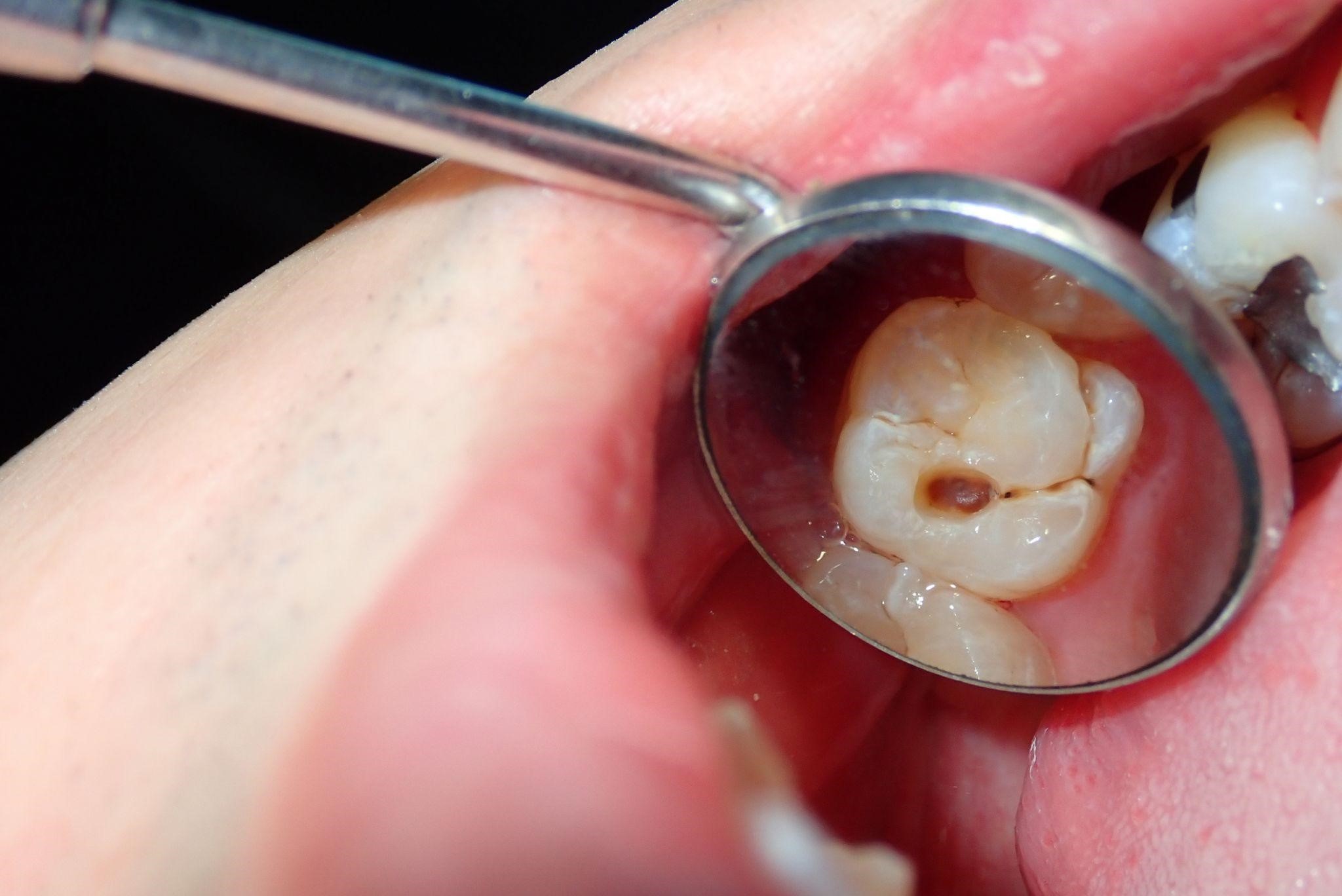
Cavities manifest in various ways depending on their location, size, and the stage of decay. However, some common visual indicators are:
At this stage, decay appears as a white or chalky patch on the tooth surface. This happens when minerals are lost from the enamel due to acid exposure. There is usually no pain, and the tooth surface remains intact.
Early enamel damage is reversible with fluoride treatment and improved oral hygiene if caught early.
As decay continues, the enamel weakens and begins to break down. The tooth may develop light brown or yellow discolouration and feel rough in certain areas. Sensitivity to cold or sweet foods may begin at this stage.
Once enamel damage progresses, the decay cannot repair itself and requires dental treatment.
An advanced cavity is usually visible as a dark brown or black spot or a small hole in the tooth. Decay has reached the dentin layer, which spreads more quickly than enamel.
Symptoms often include:
Treatment typically involves a dental filling to stop the decay from spreading further.
Severe cavities involve extensive tooth damage and may reach the nerve. The tooth may appear darkened, broken, or heavily decayed, and pain can become constant or severe.
At this stage, treatment may require a root canal or, in some cases, tooth extraction. Early intervention prevents decay from reaching this point.
It’s essential to remember that not all cavities are easily visible, especially when they are just beginning or located between teeth. Dentists have specialised tools and techniques to detect cavities in their earliest stages, ensuring timely intervention and the best outcomes for your oral health. There are, however, other symptoms you can look out for.
Beyond the visual indicators of cavities, several other symptoms can hint at the presence of tooth decay. Being attuned to these signs can aid in early detection and treatment, helping to maintain the health and integrity of your teeth:
It’s imperative to seek professional dental advice if you experience any of these symptoms. Even if they are mild or intermittent, they can be early warning signs of a cavity. Regular check-ups and professional cleanings play a vital role in detecting and treating cavities before they escalate into more severe dental problems.
Keeping an eye out for the signs and symptoms listed above can help you suspect a cavity, but knowing for certain requires a definitive evaluation by a dental professional.
| Assessment Method | What It Involves | What It Detects |
|---|---|---|
| Professional dental examination | A dentist visually inspects each tooth using a mirror and dental instruments. | Visible cavities, enamel damage, plaque build-up, and obvious structural changes. |
| Dental X-rays | X-rays provide images of areas not visible during a standard examination. | Cavities between teeth, decay beneath fillings, and early decay below the enamel surface. |
| Dental probing | A dental probe is gently used to check for soft or weakened areas in the tooth. | Enamel breakdown and softened dentin caused by decay. |
| Laser fluorescence detection | Special devices measure fluorescence levels within the tooth structure. | Early decay that has not yet formed a visible cavity. |
| Fibre optic transillumination | Light is passed through the tooth to highlight changes in structure. | Cracks and decay that alter how light travels through the tooth. |
Cavities are easiest to treat when they are detected early, before pain or visible damage develops. A dental check-up allows decay to be identified accurately, even when it cannot be seen or felt.
At Granite Belt Dental, we assess tooth health using a thorough examination and X-rays where needed, then explain your treatment options clearly. Our focus is early intervention to prevent discomfort and avoid more complex procedures.
If you suspect you might have a cavity or if it’s been a while since your last check-up, schedule an appointment with a trusted dental clinic. If you’re in the Stanthorpe, Warwick, or Inglewood areas, contact us today.
Are you often wincing when the taste of ice cream hits your teeth? Do you dread the thought of a cold breeze against your smile? You may be one of many individuals dealing with sensitive teeth. Sensitive teeth can significantly impact your quality of life, making even the simplest activities like eating, drinking, and brushing uncomfortable. So, what causes sensitive teeth? And what treatment options are available? Learn how you can protect your teeth from developing sensitivity.
Sensitive teeth, also known as dentin hypersensitivity, is a common dental condition characterised by discomfort or sharp sudden pain in response to certain stimuli, such as cold air, hot or cold food and beverages, sweet foods, or even aggressive tooth brushing. This pain can be temporary, often sharp and sudden, but for many people, it may be persistent and cause considerable distress.
The root of this problem lies in the structure of the tooth. Each tooth is protected by a hard layer of enamel. Underneath the gum line, a layer called cementum protects the tooth root. Underneath both the enamel and the cementum is dentin, a less dense, porous substance that contains microscopic tubules. When the protective layers of enamel or cementum wear down, the dentin becomes exposed, allowing hot, cold, acidic, or sticky substances to reach the nerves inside the tooth, resulting in pain or sensitivity.
Understanding what causes sensitive teeth is crucial in finding the right solution. There are many potential causes for this dental condition:
Consuming highly acidic foods or beverages, like citrus fruits, tomatoes, and sodas, can wear down tooth enamel, leading to Dentin Hypersensitivity.
Age, poor dental hygiene, or aggressive brushing can lead to gum recession, which exposes the tooth roots, causing sensitivity.
Often an unconscious habit, especially during sleep, tooth grinding can wear down the tooth enamel, leading to sensitivity.
Decay, cavities, chipped or cracked teeth can expose the dentin, causing tooth sensitivity.
Procedures such as teeth whitening, fillings, and crowns may result in temporary sensitivity.
It’s crucial to remember that while some of these causes can be managed with good dental practices at home, others may require professional treatment. If you’re experiencing sensitive teeth, Granite Belt Dental offers check ups for sensitive teeth or toothaches to the Warwick and Stanthorpe region.
The discomfort of sensitive teeth can impact various aspects of your life. For one, it can affect your dietary choices, as you may find yourself avoiding certain foods and drinks that trigger your sensitivity, such as cold ice cream or hot coffee. It might also impact your oral hygiene routine, as brushing or flossing might become painful tasks, and you could end up neglecting them. Furthermore, the discomfort can create a distraction, causing you to lose focus on your daily activities.
While sensitive teeth might seem like a minor issue at first glance, it’s not something to be ignored. The same factors that cause tooth sensitivity, like enamel erosion or tooth decay, can lead to more severe dental issues if not addressed promptly. This is why it’s crucial to consult with a dental professional if you’re experiencing sensitive teeth.
When it comes to sensitive teeth treatment, the right approach will largely depend on the underlying cause. The treatment could be as simple as altering your oral hygiene routine at home or may require a professional procedure performed by your dentist.
These special toothpastes contain compounds that help block transmission of sensation from the tooth surface to the nerve, and can often be an effective first step towards managing tooth sensitivity.
Using a toothbrush with soft bristles, combined with gentle brushing technique, can help prevent further enamel erosion and gum recession.
A daily rinse with a fluoride mouthwash can help strengthen tooth enamel and may provide additional relief from the pain of tooth sensitivity.
Limiting the intake of acidic foods and drinks, such as citrus fruits, wine, and soda, can help prevent further enamel erosion.
Your dentist might apply fluoride to the sensitive areas of your teeth to strengthen tooth enamel and reduce pain.
If your tooth sensitivity is due to tooth decay or a fractured tooth, then fillings, crowns, inlays, or bonding might be needed to fix the issue.
If your tooth root has lost gum coverage, a small amount of gum tissue can be taken from elsewhere in your mouth and attached to the affected site. This can protect exposed roots and reduce sensitivity.
If other treatments are not effective, and the sensitive teeth are severely impacting your life, your dentist may recommend a root canal, a procedure used to treat problems in the tooth’s soft core, or dental pulp.
Always remember that each person’s case is unique, and your dentist will advise you on the best treatment options based on your specific circumstances. If you’re dealing with sensitive teeth, don’t hesitate to reach out to us at Granite Belt Dental. Our professional team is here to help you navigate your dental health journey with ease and confidence.
Taking steps to prevent tooth sensitivity is an important part of maintaining good oral health. Here are a few tips:
Tooth sensitivity can have a significant impact on your life, but remember, it can be managed and treated. Understanding the causes can help you make changes to prevent it, and there are plenty of effective treatments available for those who already experience sensitivity. Above all, consistent, good oral hygiene and regular dental visits are key to keeping your teeth healthy and sensitivity-free.
If you’re experiencing sensitive teeth, it’s important to get it checked out by a professional. At Granite Belt Dental, our experienced team can provide you with a comprehensive check-up and guide you through the best treatment options for your unique needs. We’re committed to helping you maintain your oral health in a comfortable and relaxed environment. Contact us today to schedule your appointment, and take the first step towards a pain-free smile!