
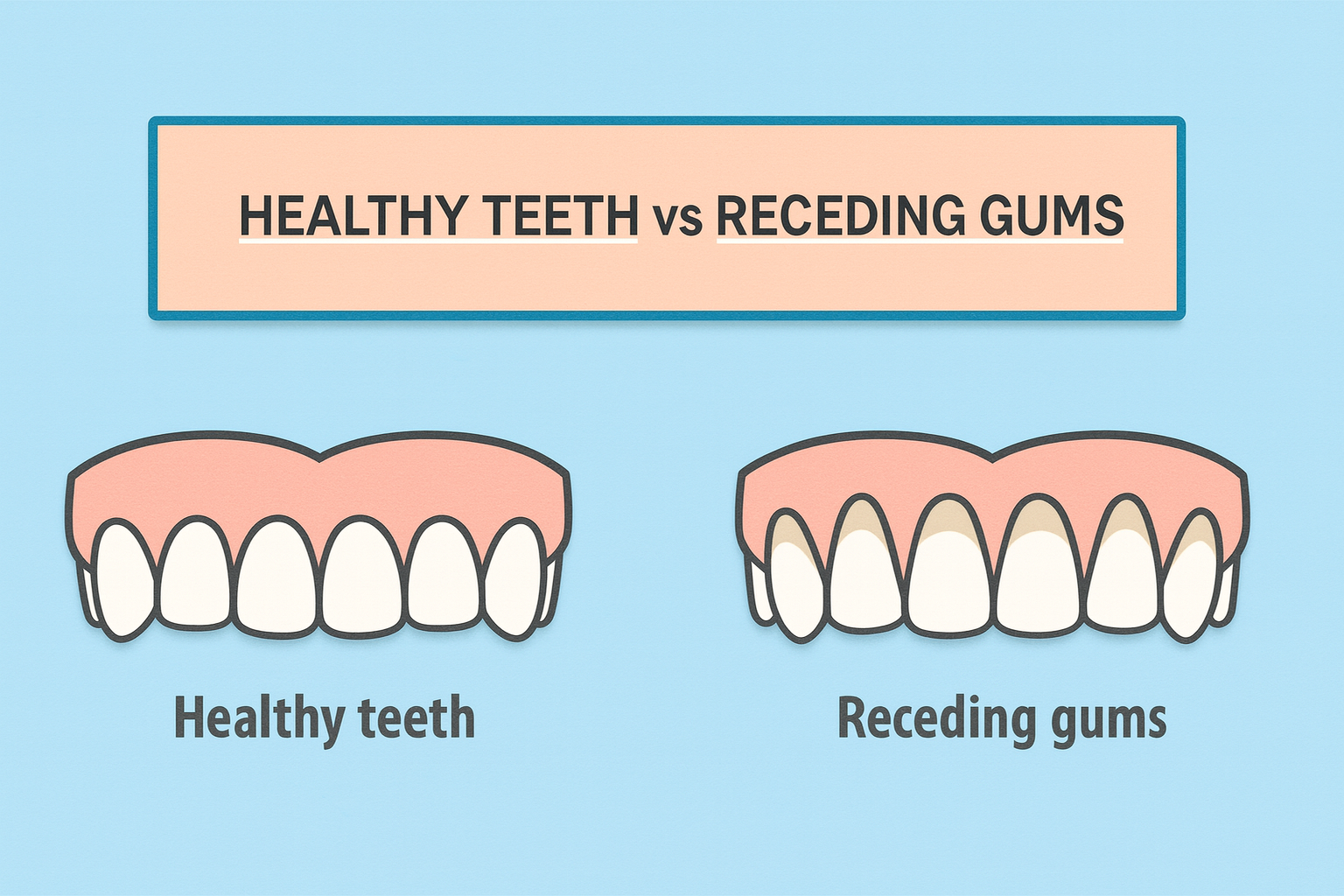
Receding gums happen when the gumline pulls back and exposes more of the tooth. You might notice your teeth looking longer, or feel sensitivity when eating or drinking. These changes often point to gum disease, brushing habits, or other issues that need attention before they worsen.
At Granite Belt Dental, we help patients understand what’s causing their gum recession and provide treatment options that protect long-term gum and tooth health.
Common Symptoms
Receding gums often develop slowly, so it’s helpful to know what to look for. You may notice:
- Teeth appearing longer than usual
- Sensitivity to hot, cold, or sweet foods
- The gumline pulling away from the teeth
- Red, swollen, or tender gums
- Exposed roots or small notches near the gumline
If any of these symptoms sound familiar, a dental check-up can help confirm what’s going on and prevent the issue from progressing.
Causes of Receding Gums
Gum recession can develop for a range of reasons. Some causes are linked to daily habits, while others relate to underlying dental or health conditions.
Common factors include:
- Periodontal (gum) disease that breaks down the supporting tissues
- Aggressive brushing or using a hard-bristled toothbrush
- Plaque build-up caused by inconsistent oral hygiene
- Teeth grinding or clenching, which places pressure on the gums
- Misaligned teeth or bite issues that create uneven force
- Genetic factors, which may make some people more prone to gum changes
Why Early Treatment Matters
Gum recession is easier to manage when treated early. As the gums pull back, the roots of the teeth become exposed, which can lead to:
- Ongoing tooth sensitivity
- A higher risk of decay or infection
- Progression of gum disease
- Loosened teeth or, in severe cases, tooth loss
Addressing gum recession early helps protect the supporting tissues around your teeth and reduces the chances of long-term damage. Regular check-ups allow issues to be caught quickly so treatment stays simple and effective.
Treatment Options at Granite Belt Dental
Treatment for receding gums depends on what’s causing the recession and how advanced it is. After assessing your gums, we may recommend:
Professional deep cleaning (scaling and root planing) to remove plaque and bacteria below the gumline
Gum disease treatment or ongoing maintenance to keep inflammation under control
Desensitising or fluoride applications to ease sensitivity and protect exposed areas
Custom night guards if grinding or clenching is contributing to gum changes
Restorative treatments, such as bonding or small fillings, to cover exposed roots and protect vulnerable surfaces
Referral for gum grafting if surgical support is needed to restore gum coverage
Our goal is to manage the cause, protect the teeth and gums, and reduce further recession wherever possible.
How to Prevent Further Gum Recession
There are simple steps you can take at home to help protect your gums.
- Using a soft-bristled toothbrush and brushing gently prevents unnecessary wear on the gumline.
- Keeping up with regular dental check-ups and hygiene visits allows early signs of inflammation or plaque build-up to be managed before they cause further recession.
If you grind or clench your teeth, treating the habit can ease pressure on the gums and supporting tissues. Avoiding smoking and maintaining good daily oral care also play a key role in keeping the gums healthy and stable.
How We Can Help
If you’ve noticed changes in your gumline or your teeth are feeling more sensitive than usual, it’s worth having your gums checked. Early care can prevent the recession from progressing and protect the long-term health of your smile.
Granite Belt Dental offers gentle, thorough assessments for patients across Warwick and Stanthorpe. Get in touch to book an appointment and we’ll help you understand what’s happening and what your next steps should be.
