
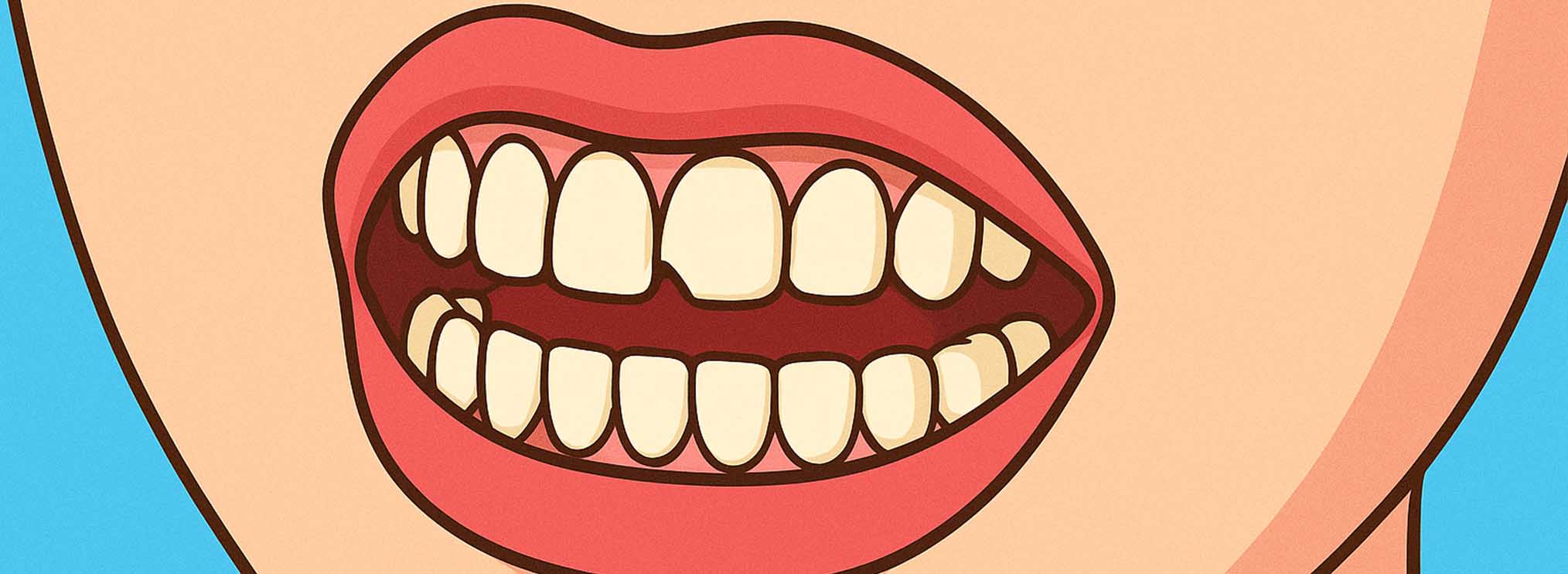
Understanding a Chipped or Broken Tooth
A chipped or broken tooth can happen suddenly – often from biting something hard, a sporting accident, or a simple fall. Even minor chips can make you feel self-conscious, while deeper cracks may expose the tooth’s inner layers and cause sensitivity or pain.
At Granite Belt Dental, we understand that accidents happen. Our team can assess the damage, relieve discomfort, and repair your tooth to restore both function and appearance.
Common Causes
A chipped or broken tooth can occur for several reasons:
- Biting hard foods or objects – Ice, hard lollies, nuts, or even a fork can cause enamel to break.
- Injury or accident – Falls, contact sports, or trauma to the face are common causes.
- Teeth grinding (bruxism) – Constant pressure can weaken enamel, making teeth more prone to chips.
- Tooth decay – Cavities and weakened enamel increase the risk of breakage.
- Acidic or sugary foods – Over time, these can erode enamel and reduce its strength.
- Aging or wear – Teeth naturally become more brittle with age.
Signs and Symptoms
You may notice:
- A visible chip or rough edge when you run your tongue across your teeth
- Sensitivity to hot, cold, or sweet foods
- Discomfort when chewing
- Sharp edges irritating your tongue or cheek
- Pain, if the nerve or inner layer of the tooth is exposed
Even if the damage seems small, it’s best to have it checked – minor chips can worsen over time or lead to infection.
Treatment Options at Granite Belt Dental
The right treatment depends on the size and location of the chip. Our dentists will carefully examine the affected tooth and recommend one or more of the following:
- Polishing and smoothing – Minor chips can often be gently polished for a smoother feel.
- Dental veneers and bonding – Veneers are porcelain shells that can restore front teeth with larger chips or cosmetic concerns, dental bonding involves tooth-coloured resin that fills the chipped area and blends seamlessly with your natural teeth.
- Dental crowns – A protective cap that strengthens and restores teeth with significant structural damage.
- Fillings – Suitable for chips affecting the biting surfaces or back teeth.
- Root canal treatment – Recommended if the inner pulp or nerve has been exposed by a deeper fracture.
What to Do Before Your Appointment
If you’ve broken a tooth:
- Rinse your mouth gently with warm water.
- Save any tooth fragments and bring them to your appointment.
- Avoid biting or chewing on the damaged tooth.
- Use dental wax or sugar-free gum to protect sharp edges if needed.
- Take over-the-counter pain relief if you’re uncomfortable.
Prompt dental care can prevent infection and make repairing your tooth much easier.
Prevention Tips
- Avoid biting hard objects like ice or pens.
- Wear a custom mouthguard during contact sports.
- Use a nightguard if you grind your teeth.
- Maintain regular dental check-ups and cleans.
- Limit acidic or sugary foods that erode enamel.
How We Can Help
At Granite Belt Dental, we combine gentle care with advanced technology to restore your smile quickly and comfortably. Whether your tooth has chipped, cracked, or broken, we’ll find the most effective solution to protect your long-term oral health.
Our friendly team in Stanthorpe and Warwick are here to help you feel confident again — without the stress or discomfort.
If you’ve damaged a tooth, book an appointment today to have it assessed before the problem worsens.
Frequently Asked Questions
1. Is a chipped tooth a dental emergency?
Not always, but it’s important to see a dentist soon. Even a small chip can expose sensitive tissue and increase the risk of infection or further damage.
2. Can a chipped tooth repair itself?
No – once enamel breaks, it doesn’t grow back. However, your dentist can restore it using bonding, veneers, or other treatments.
3. What should I do if my tooth fragment falls out?
Keep the fragment in milk or saliva and bring it to your appointment. In some cases, it can be reattached by your dentist
4. Will a chipped tooth hurt?
Small chips may cause no pain at all, but deeper breaks can expose the nerve and lead to sensitivity or discomfort.
5. How can I prevent future chips or cracks?
Avoid chewing on hard objects, wear a mouthguard during sports, and schedule regular dental visits to keep your teeth strong and healthy.
