

A cavity is an area of tooth decay that appears as a white, brown, or black spot, a visible hole, or structural damage in the tooth, depending on how advanced the decay is. Early cavities are often invisible to the naked eye and usually cause no pain.
Cavities develop when plaque bacteria produce acid that wears away tooth enamel over time. As decay progresses, it moves from the outer enamel into the deeper dentin layer and, if left untreated, can reach the nerve of the tooth.
Because cavities do not always look obvious in the early stages, many people have decay without realising it. This is why regular dental check-ups are essential for detecting cavities early, when treatment is simpler and less invasive.
What is a Cavity and What Does it Look Like?
A cavity is essentially a hole in a tooth resulting from tooth decay. They begin when harmful acids in the mouth erode the tooth’s hard outer layer, known as enamel. This decay can be caused by various factors, including the buildup of plaque, frequent consumption of sugary foods and beverages, and inadequate oral hygiene practices. If not promptly treated, cavities can lead to more severe dental issues.
Treatments for cavities include fillings, root canal therapy, or even tooth extractions. Timely intervention when a cavity is detected is crucial for maintaining optimal oral health. It’s worth noting that cavities, also known as dental caries, can affect anyone, regardless of age. Regular dental check-ups at dental clinics coupled with good oral hygiene, can effectively prevent cavity formation.
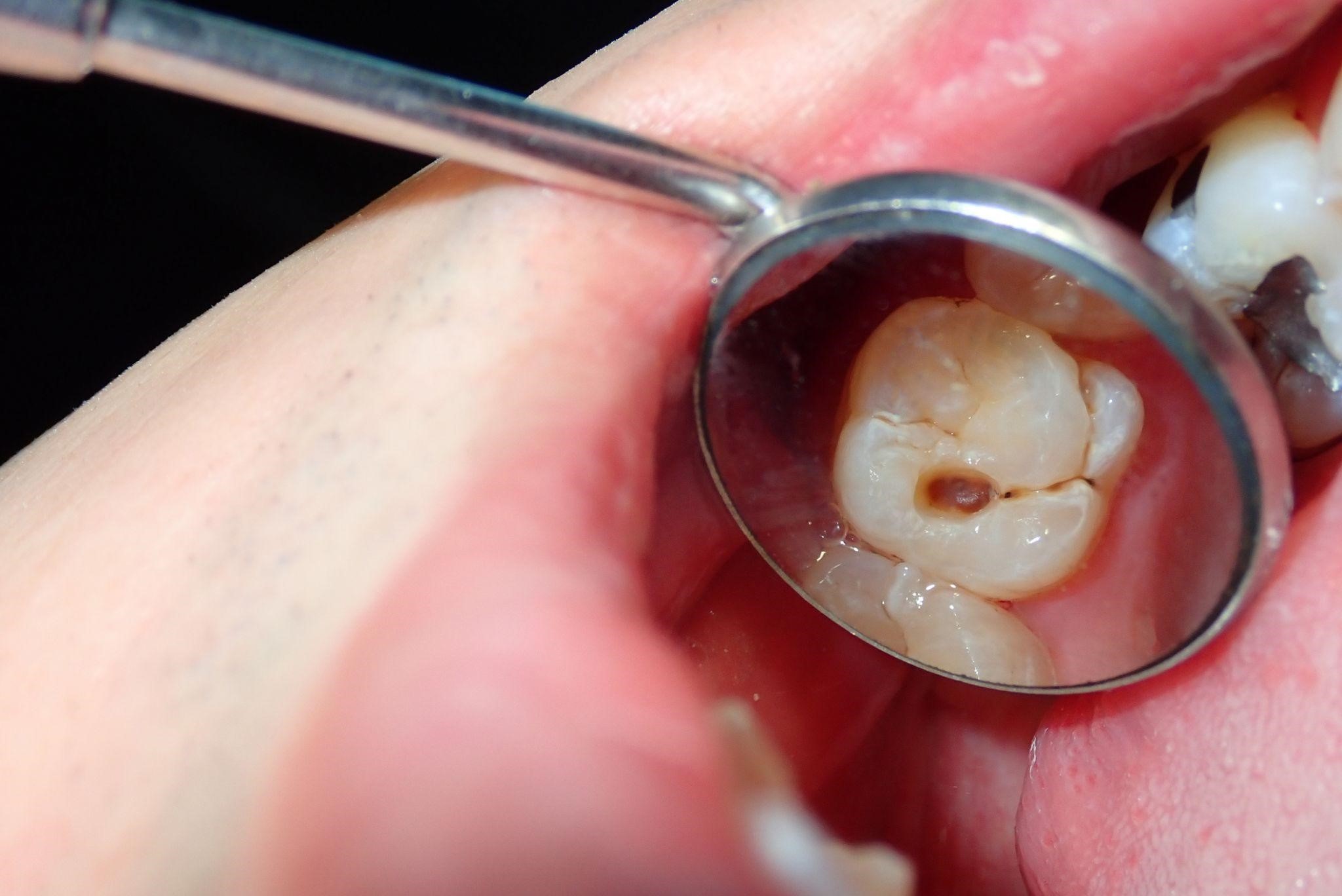
Cavities manifest in various ways depending on their location, size, and the stage of decay. However, some common visual indicators are:
What Does a Cavity Look Like at Each Stage?
Stage 1: Early Enamel Damage
At this stage, decay appears as a white or chalky patch on the tooth surface. This happens when minerals are lost from the enamel due to acid exposure. There is usually no pain, and the tooth surface remains intact.
Early enamel damage is reversible with fluoride treatment and improved oral hygiene if caught early.
Stage 2: Developing Cavity
As decay continues, the enamel weakens and begins to break down. The tooth may develop light brown or yellow discolouration and feel rough in certain areas. Sensitivity to cold or sweet foods may begin at this stage.
Once enamel damage progresses, the decay cannot repair itself and requires dental treatment.
Stage 3: Advanced Cavity
An advanced cavity is usually visible as a dark brown or black spot or a small hole in the tooth. Decay has reached the dentin layer, which spreads more quickly than enamel.
Symptoms often include:
- Sharp sensitivity
- Pain when chewing
- Food getting stuck in the tooth
Treatment typically involves a dental filling to stop the decay from spreading further.
Stage 4: Severe Decay or Infection
Severe cavities involve extensive tooth damage and may reach the nerve. The tooth may appear darkened, broken, or heavily decayed, and pain can become constant or severe.
At this stage, treatment may require a root canal or, in some cases, tooth extraction. Early intervention prevents decay from reaching this point.
It’s essential to remember that not all cavities are easily visible, especially when they are just beginning or located between teeth. Dentists have specialised tools and techniques to detect cavities in their earliest stages, ensuring timely intervention and the best outcomes for your oral health. There are, however, other symptoms you can look out for.
Cavity Symptoms
Beyond the visual indicators of cavities, several other symptoms can hint at the presence of tooth decay. Being attuned to these signs can aid in early detection and treatment, helping to maintain the health and integrity of your teeth:
- Tooth sensitivity: One of the most common symptoms is increased sensitivity in the affected tooth. This sensitivity can be felt when consuming hot, cold, sweet, or acidic foods and drinks.
- Toothache: A spontaneous toothache that doesn’t seem to have an obvious cause can be a sign of a cavity. The pain might be sharp, throbbing, or even a constant dull ache.
- Pain when biting down: You may experience discomfort or pain when biting down or chewing food. This happens because the act of biting can put pressure on the cavity, causing pain.
- Bad breath: Persistent bad breath or an unpleasant taste in the mouth can arise from cavities. This is due to the bacteria causing the decay.
- Swelling in the gums: In advanced cases, if the cavity reaches the tooth’s root, it can lead to an abscess or infection in the gum, resulting in swelling or even pus.
- Holes or pits: Feeling a noticeable hole or pit in the tooth when you run your tongue over it, even if it isn’t visible, can be an indicator of a cavity.
It’s imperative to seek professional dental advice if you experience any of these symptoms. Even if they are mild or intermittent, they can be early warning signs of a cavity. Regular check-ups and professional cleanings play a vital role in detecting and treating cavities before they escalate into more severe dental problems.
How Dentists Check for Cavities
Keeping an eye out for the signs and symptoms listed above can help you suspect a cavity, but knowing for certain requires a definitive evaluation by a dental professional.
| Assessment Method | What It Involves | What It Detects |
|---|---|---|
| Professional dental examination | A dentist visually inspects each tooth using a mirror and dental instruments. | Visible cavities, enamel damage, plaque build-up, and obvious structural changes. |
| Dental X-rays | X-rays provide images of areas not visible during a standard examination. | Cavities between teeth, decay beneath fillings, and early decay below the enamel surface. |
| Dental probing | A dental probe is gently used to check for soft or weakened areas in the tooth. | Enamel breakdown and softened dentin caused by decay. |
| Laser fluorescence detection | Special devices measure fluorescence levels within the tooth structure. | Early decay that has not yet formed a visible cavity. |
| Fibre optic transillumination | Light is passed through the tooth to highlight changes in structure. | Cracks and decay that alter how light travels through the tooth. |
Book a Dental Check-Up
Cavities are easiest to treat when they are detected early, before pain or visible damage develops. A dental check-up allows decay to be identified accurately, even when it cannot be seen or felt.
At Granite Belt Dental, we assess tooth health using a thorough examination and X-rays where needed, then explain your treatment options clearly. Our focus is early intervention to prevent discomfort and avoid more complex procedures.
If you suspect you might have a cavity or if it’s been a while since your last check-up, schedule an appointment with a trusted dental clinic. If you’re in the Stanthorpe, Warwick, or Inglewood areas, contact us today.
