
Understanding Gum Disease
Gum disease occurs when the gums and supporting tissues around your teeth become inflamed due to plaque and bacteria build-up. It’s one of the most common dental problems in Australia, affecting nearly one in three adults.
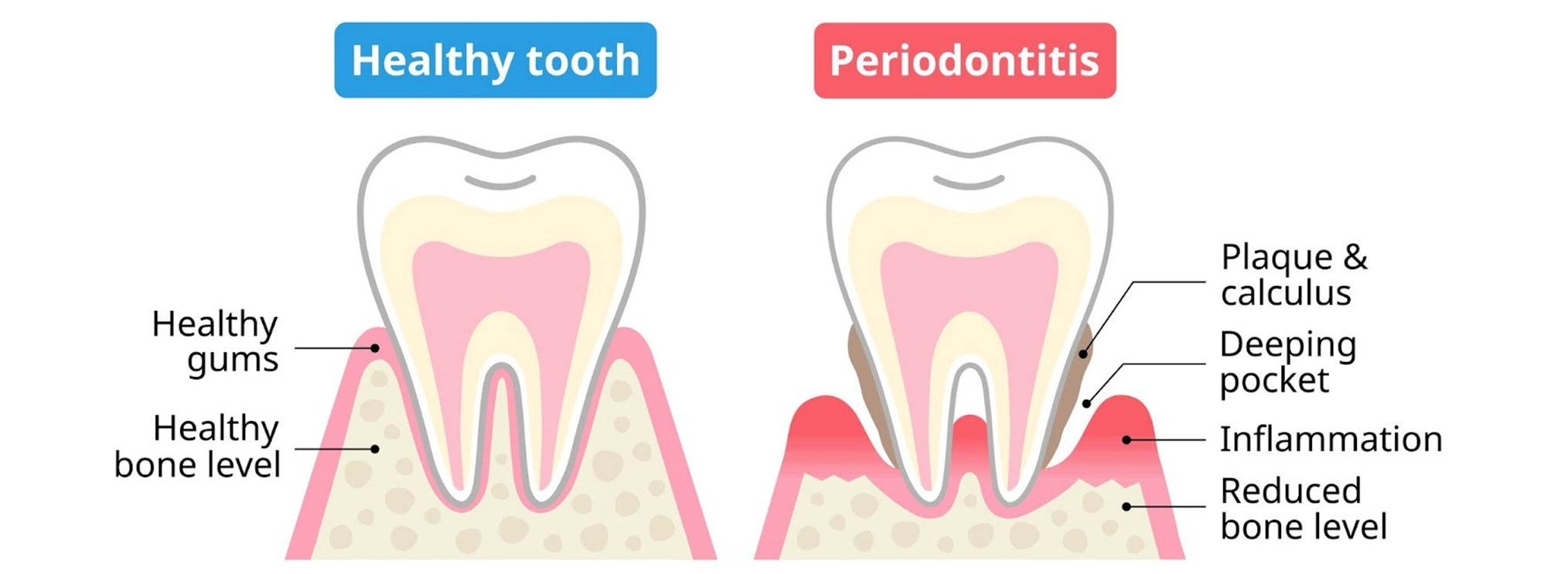
In its early stage (called gingivitis), gum disease can often be reversed with professional dental care and improved oral hygiene. However, if left untreated, it can progress to periodontitis, a more serious infection that damages the bone supporting your teeth – potentially leading to tooth loss.
At Granite Belt Dental, we help patients prevent, identify, and manage gum disease before it leads to lasting damage.
Signs and Symptoms
Common signs of gum disease include:
- Red, swollen, or tender gums
- Bleeding when brushing or flossing
- Persistent bad breath or a bad taste in your mouth
- Gums that pull away from your teeth (receding gums)
- Sensitive teeth
- Loose or shifting teeth
If you notice any of these symptoms, it’s important to see your dentist as soon as possible.
Causes and Risk Factors
Gum disease is caused by plaque, a sticky film of bacteria that forms on teeth and gums. When plaque isn’t removed through regular brushing and flossing, it hardens into tartar (calculus) – which can only be removed by a dental professional.
Several factors can increase your risk of developing gum disease:
- Smoking or using tobacco products
- Poor oral hygiene habits
- Diabetes
- Hormonal changes (such as during pregnancy or menopause)
- Certain medications that cause dry mouth
- Poor nutrition
- Stress
- A family history of gum disease
Gingivitis vs. Periodontitis
Gingivitis
This is the early stage of gum disease, when gums become red, swollen, and may bleed easily. At this point, the condition is reversible with professional cleaning and good home care.
Periodontitis
If gingivitis is left untreated, it can progress to periodontitis. This causes the gums to pull away from the teeth, forming pockets that trap bacteria. Over time, this can lead to bone loss, loose teeth, and even tooth loss.
Treatment Options at Granite Belt Dental
Our dentists offer a range of treatments depending on the stage and severity of gum disease:
- Professional dental cleaning – Removes plaque and tartar build-up to restore gum health.
- Scaling and root planing – A deep cleaning treatment that removes bacteria from beneath the gumline and smooths tooth roots.
- Antibacterial treatments – Target and control bacterial infection in affected areas.
- Ongoing maintenance visits – Regular cleans and monitoring to prevent the condition from returning.
- Advanced periodontal therapy – For severe cases, treatment may involve referral to a periodontist for specialised care such as gum or bone grafting.
Learn more about these treatments here:
How to Prevent Gum Disease
Good oral hygiene is the most effective way to prevent gum disease:
- Brush your teeth and gums gently twice a day with fluoride toothpaste.
- Floss daily to remove plaque between your teeth.
- Rinse with water or an antibacterial mouthwash after meals.
- Eat a balanced diet and limit sugary foods.
- Avoid smoking and excessive alcohol consumption.
- Visit your dentist every 6 months for a check-up and clean.
How We Can Help
At Granite Belt Dental, we’re committed to helping you achieve and maintain a healthy smile for life. Our gentle and experienced team can identify the early signs of gum disease and provide effective, tailored treatment before permanent damage occurs.
If your gums are sore, bleeding, or receding, book an appointment at our Stanthorpe or Warwick clinic today for a professional assessment and personalised care plan.
Frequently Asked Questions
1. Can gum disease be cured?
Early-stage gum disease (gingivitis) can be completely reversed with treatment and good oral hygiene. Advanced gum disease (periodontitis) cannot be cured, but it can be managed and stabilised with professional care.
2. What happens if gum disease is left untreated?
Untreated gum disease can cause bone and tooth loss, and has also been linked to health conditions such as heart disease, stroke, and diabetes.
3. Is gum disease painful?
Not always. Gum disease often progresses painlessly, which is why regular check-ups are important for early detection.
4. How is gum disease diagnosed?
Brushing removes surface plaque, but it can’t always remove stains embedded in enamel. In these cases, a professional cleaning or whitening treatment may be needed.
5. How often should I see my dentist if I have gum disease?
Patients with gum disease may need to visit every 3 to 6 months for ongoing maintenance and professional cleaning, depending on the severity of their condition.
